

Why This Matters:
– Matt Jude

What the 1920s Can Teach Us About Surviving the AI Revolution
By George Anders
A century ago, cars and radio upended society just as AI is doing today
We’ve been here before.
Long before ChatGPT stormed onto the scene—poised to rewrite everything from business plans to wedding vows—a different technology swept through American society like wildfire, thrilling young people and eliciting warnings of declining family values.
Long before the rise of YouTube sensations like MrBeast (with 480 million followers), a different kind of entertainment technology created a roster of world-famous celebrities, whose obsessed fans ranged from Arkansas to Australia.
And long before Elon Musk put his brilliant, unnerving innovator’s creed to work, a different industry pioneer dragged the world’s entire manufacturing sector into the era of mass production, creating shock waves again and again.
It’s easy to assume that today’s whirlwind of disruptive tech—robo-cars, AI, brain implants and more—is jolting American society as never before. But don’t overlook the 1920s, when the country’s rapid embrace of cars, radio, airplanes, full-length movies, in-home electricity, etc., created an equally intense sense of innovation gone wild.
Lessons from that decade abound—and many still have relevance today. In fact, a close look at how U.S. society made peace with the 1920s’ innovation frenzy provides some encouraging signals about the ways that society can absorb, empower and control the impact of jarring new technology.
Fast cars and open roads
The most basic echo of the 1920s is the shock that comes from being in an era of profound change. The dawn of the automobile age, in particular, felt overwhelming to millions of Americans. Pioneering sociologists Helen and Robert Lynd spent a chunk of the 1920s in Muncie, Ind. (which they code-named Middletown USA) and took note of the many ways that fast cars and open roads were annihilating the town’s longtime social norms.
So long to the old rule of “A high school boy does not need much spending money,” they wrote. Goodbye to the credo: “Rain or shine, I never miss a Sunday morning at church.” America was rapidly becoming more consumerist—and more secular—as an emerging car culture took hold, the Lynds found. Among their findings: Weekend automobile rambles were replacing church attendance.
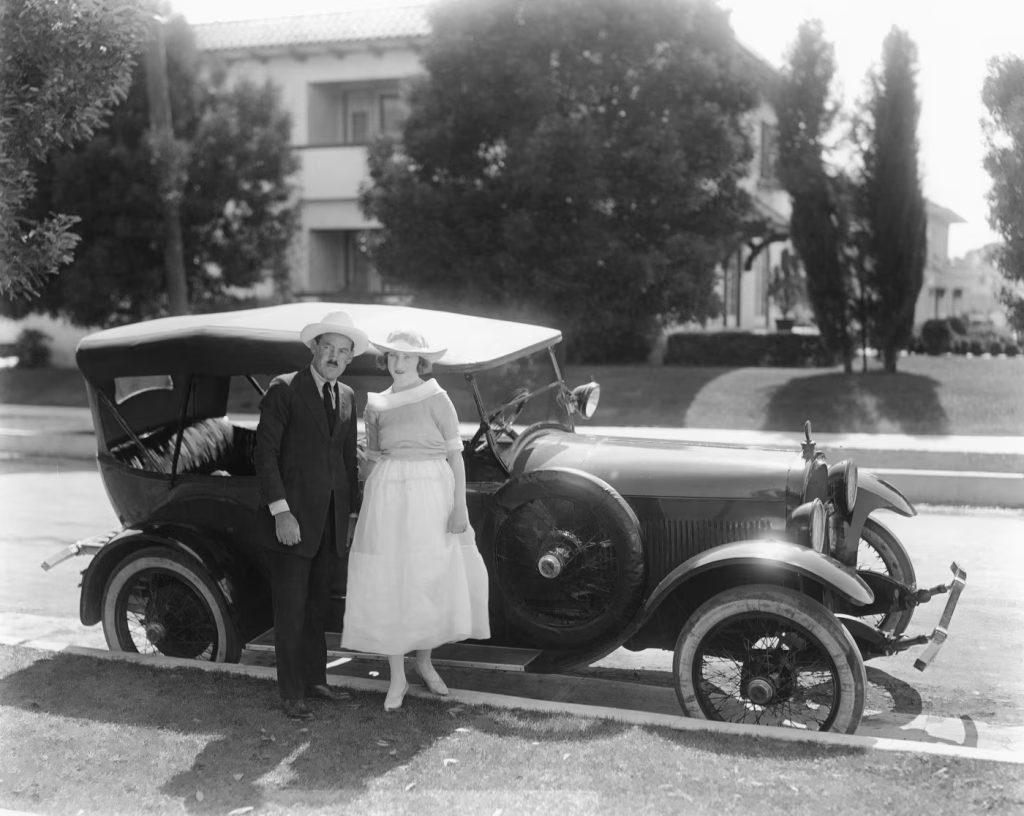
This new abundance of cars brought even bolder changes for courtship among the unmarried. Why bother with chaperoned meetings in the family parlor when you and your beau could enjoy an unsupervised car ride. Traditionalists protested that “the home is being endangered,” but there was no turning back.
Here’s the good news for those worried that adjustment isn’t possible: Over time, most of the old guard slowly, grudgingly, got used to the new ways. Novelists throughout the 1920s tended to cast modernity as the villain, most notably in F. Scott Fitzgerald’s “The Great Gatsby,” where a reckless-driving incident brings death and deception. But in everyday life, most people found that innovation brought convenience, joy and efficiency to their lives.
Help wanted
It helped tremendously that rapid innovation in each sector—movies, cars, aviation and electrification—brought many spillover jobs and living-standard improvements in other areas, even as many people in the traditional sectors (think anything to do with horse-drawn transportation) lost theirs. For example, Hollywood’s directors, studio owners and big-name actors like Mary Pickford and Douglas Fairbanks weren’t the only ones getting rich from the movie-viewing boom. Local entrepreneurs made money, too, opening more than 20,000 movie theaters across America by 1930. Set designers, makeup artists and gossip-minded journalists found new work as well.
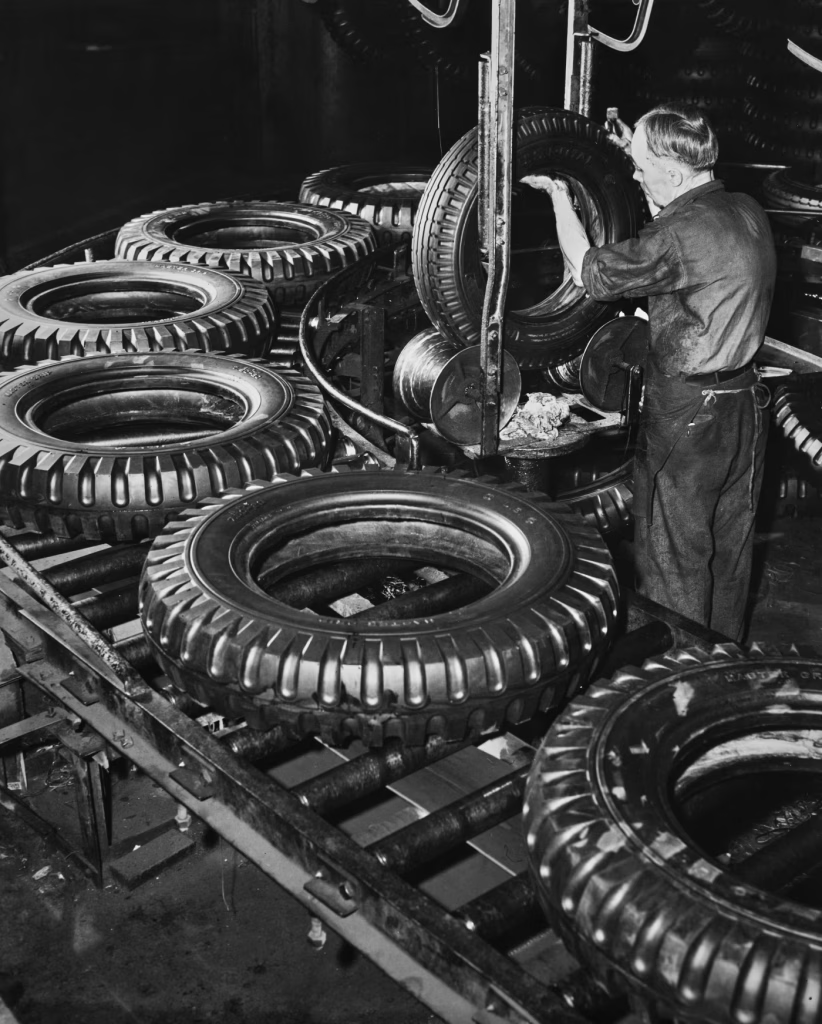
Similarly, the car-industry boom created more than just a flurry of assembly-line jobs in Detroit. If millions of Americans wanted cars—and they did—that meant new demand for car mechanics, filling-station operators, road-atlas publishers, driving instructors, roadside cafe operators and road builders. Financiers and corporate leaders didn’t monopolize the benefits of big innovations; instead, a sense of social uplift for everyone helped ease misgivings about progress’s rapid pace.
By 1930, more than 80,000 people were working as electricians, a profession that hardly existed a decade before. Census data also showed that 168,000 people were working in rubber factories, most of them making tires to accommodate Detroit’s booming production of cars, trucks and buses. Another 450,000 people were building roads, bridges and other structures needed by the ever expanding auto industry.
“Are we moving too fast?” automotive pioneer Henry Ford rhetorically asked in a late-career memoir—and then answered his own question with a resounding No. “It is easier to go along with progress than to try to hold things back,” Ford wrote. “Only old, outworn notions stand in the way of these ideas.”
It’s too soon to know whether artificial intelligence will ultimately be a job creator or a job killer, as many people fear. But the experience of the 1920s (as well as most new technologies throughout history) offers at least some hope that the past will repeat itself.
Labor savers
It’s also useful to compare artificial intelligence in our era with electricity in the 1920s. We are promised all manner of improvements in our lives thanks to AI—whether it’s in healthcare or transportation or education or companionship. We’re starting to get a sense that at least some of these promises aren’t fantasies.
Similarly, during the Roaring ’20s, both cities and rural areas benefited from the nationwide electrification, which surged to 68% of people’s homes in 1930, up from just 35% in 1920. Nobody found joy watching the dials turn on their electricity meters. But electricity’s ability to power labor-saving appliances in millions of homes was a different story. In the course of the 1920s, electric refrigerators, toasters, vacuum cleaners and mixers made their debuts. Electric lights replaced kerosene lamps. “Every year, people demand better wiring,” the Washington Post reported in 1927.
Most significantly, mass-audience radio came of age in the 1920s, connecting America in profound new ways. People across the country could listen to the same comedians, storytellers and politicians. A new, national culture was being stitched together.
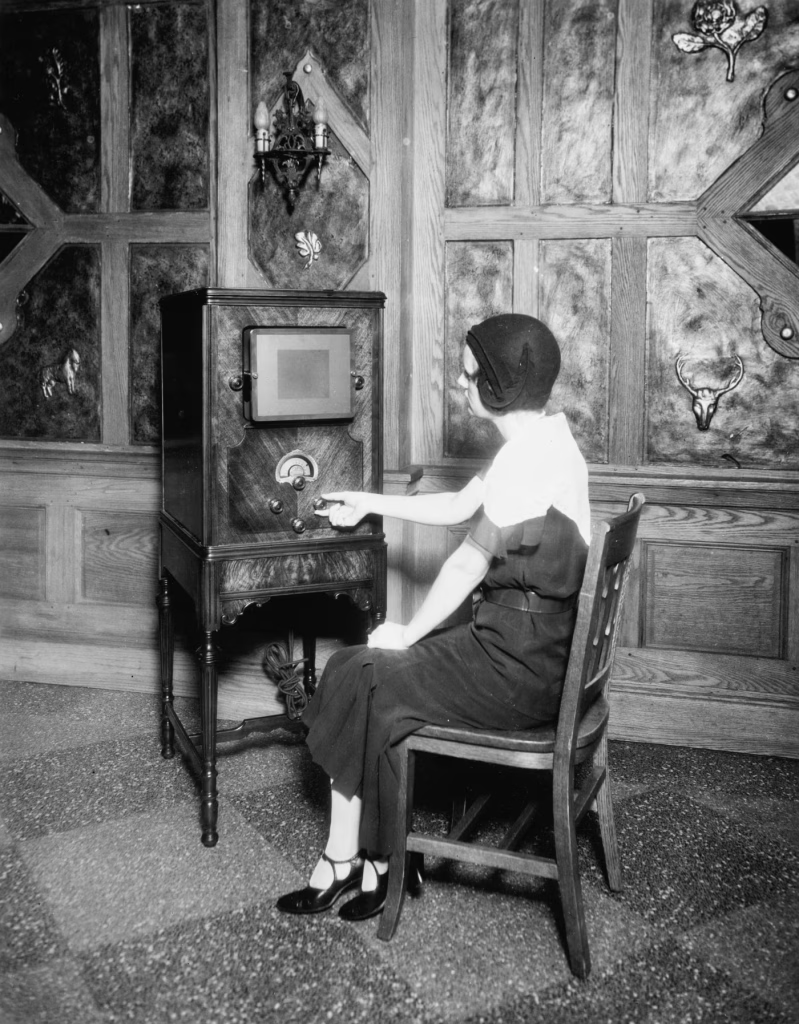
That is the story we tell in retrospect, anyway. Plenty of people in the 1920s thought radio programming was a noisy, idiotic embarrassment. In 1927, H.G. Wells, the British author and intellectual, called radio “inferior” entertainment that should be listened to “only by the sick, the lonely and the suffering.”
David Sarnoff, general manager of Radio Corp. of America, shot back that he was trying to improve “the happiness of the nation” by delivering popular music to millions of people. Nearly a century later, that same argument still flares, though now it is more likely to involve TikTok, Reddit or YouTube, instead of dear old radio. The doubters always have a point; with the passage of time, the innovators usually win out.
Safety measures
The Roaring ’20s also provide a path forward when it comes to one of the most troublesome issues facing the country today: questions of safety and product quality.
In the early 1920s, the injury and death rates for both aviation and automobile travel were appalling. Cars back then didn’t have rearview mirrors or four-wheel brakes. Airplane pilots went airborne by themselves (no licenses) after as little as 10 hours of in-flight instruction. Safety data from 1920 shows that car-related death rates were a horrifying 20 times as high as today, when calculated on a per-mile-driven basis.
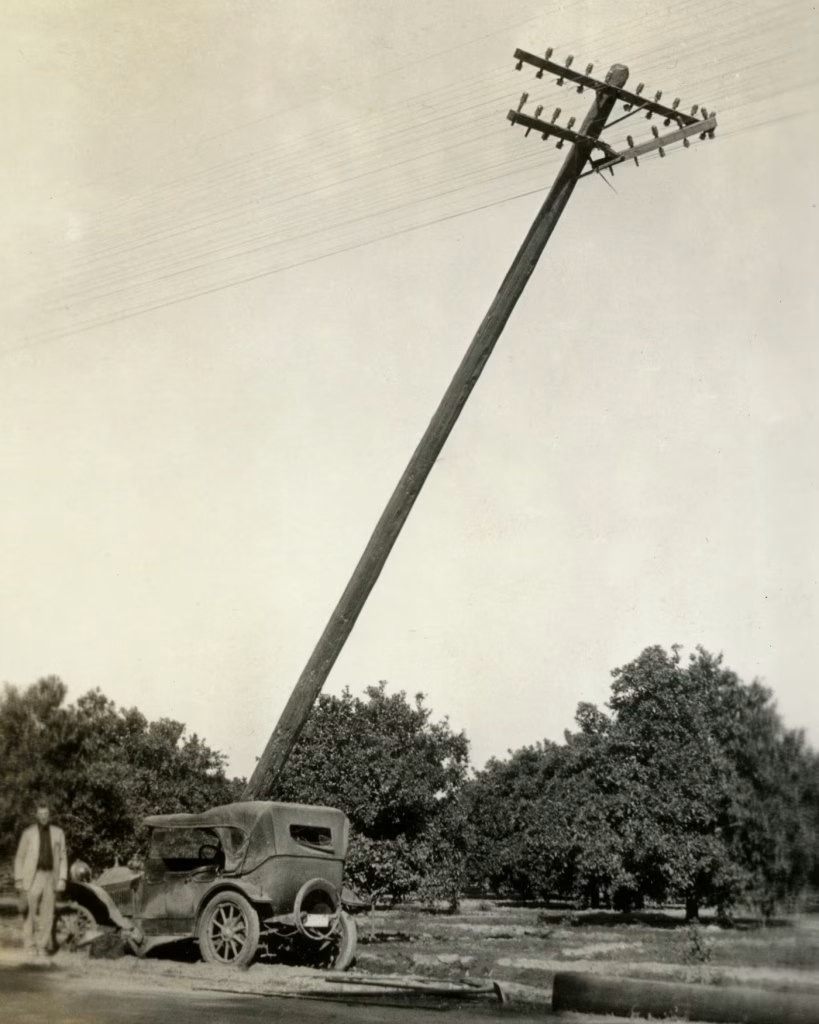
It didn’t take long for safety to become a big issue, attracting both talk and action. Charles Lindbergh, the aviation pioneer, spoke out against the perils of low-cost flight-training schools that graduated poorly prepared pilots. Congress responded by passing the Air Commerce Act of 1926, which set much tougher requirements, at least for interstate flight.
Auto safety got better, too, with both industry and government taking action. Better mirrors, better brakes and shatterproof windshields became standard. Cities such as Los Angeles and Detroit installed red-yellow-green traffic lights that governed drivers’ actions on busy streets. New Jersey became the first state to insist on driver’s licenses, with the state’s motor-vehicle commissioner in 1924 declaring: “It is an absolute necessity to do this in order to conserve human life.”
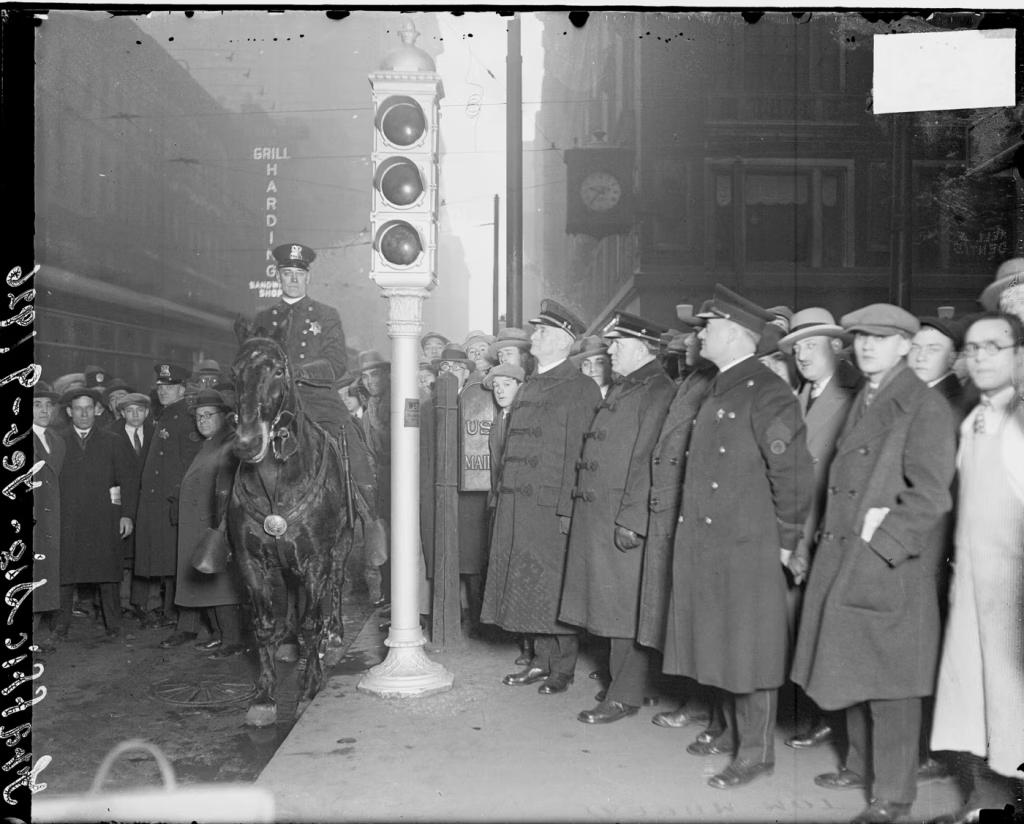
Today’s tech giants and regulators have so far been more talk than action in a host of areas, including AI, biomedical implants and especially social media, where there has been plenty of angst about what the internet is doing to children. Tech companies so far have been more concerned with making sure we spend as much time as possible with their products, whatever the consequences. And attempts to write landmark new federal legislation often founder without even a vote.
But much of the technology is still in its infancy, and there’s still time to get it right. As AI pioneer and Anthropic CEO Dario Amedei recently wrote: “When put in the darkest circumstances, humanity has a way of gathering, seemingly at the last minute, the strength and wisdom needed to prevail.” The turmoil of the 1920s may offer guidance as we move forward.