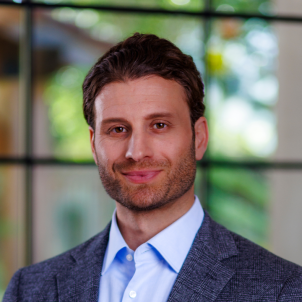

Deputy Chief Investment Officer, Rebalance Dan Mavraides explains why behavior, patience, and long-term thinking matter far more than market forecasts, AI trends, or economic headlines.

By Kelly Couto
Artificial intelligence is transforming nearly every corner of finance.
From portfolio construction and risk management to quantitative trading and market surveillance, institutions now have access to analytical capabilities that were unimaginable just a few years ago. According to McKinsey, more than 70% of financial institutions are already deploying AI in some capacity, while global spending on AI-related technologies is expected to exceed hundreds of billions of dollars over the coming years.
Yet amid the rapid evolution of technology, one question remains surprisingly relevant: Can better tools overcome poor investor behavior?
History suggests the answer is more complicated than many assume.
For decades, academic research has consistently shown that investor behavior, not market forecasting, has often been the determining factor behind long-term investment success.
Research from S&P Dow Jones Indices’ SPIVA Scorecard continues to demonstrate how difficult it is for professional fund managers to consistently outperform broad market benchmarks over extended periods. Similarly, studies from Morningstar and DALBAR have repeatedly found that individual investors tend to underperform the very investments they own, largely due to emotional decision-making, poor market timing, and reactionary behavior during periods of volatility. The challenge is not a lack of information. In fact, investors today face the opposite problem.
Never before has financial information been so abundant, accessible, and instantaneous. Economic data, market commentary, investment opinions, and algorithmically generated insights are available around the clock. Yet the abundance of information has not necessarily translated into better decisions.
According to Vanguard’s research on investor outcomes, long-term success is often driven by factors that receive far less attention than market predictions: maintaining a disciplined asset allocation, controlling costs, minimizing taxes, and staying invested through market cycles.
These findings become particularly relevant in today’s environment.
Global markets are navigating a period marked by elevated interest rates, geopolitical tensions, rapid technological disruption, and growing uncertainty around the future impact of artificial intelligence. While these forces dominate headlines, investors continue to face the same fundamental challenge that has existed for generations: distinguishing signal from noise.
The irony is that many of the principles that have historically created wealth remain remarkably unchanged.
Diversification. Patience. Cost discipline. Long-term thinking. As financial markets become increasingly sophisticated, some of the most important investment lessons may also be the simplest. What does real risk actually mean? How should investors think about uncertainty?Can discipline outperform prediction? And what role will artificial intelligence play in the future of capital allocation?
To explore these questions, Money In Focus Power Series sat down with Dan Mavraides, Deputy Chief Investment Officer at Rebalance, for an in-depth conversation on investment philosophy, portfolio construction, behavioral finance, financial literacy, and the evolving relationship between technology and long-term wealth creation.
In the interview that follows, Mavraides shares why he believes investor behavior remains the most overlooked source of investment performance—and why the greatest edge in investing may have less to do with predicting the future and more to do with staying committed to a plan when uncertainty arrives.

Kelly Couto: Every seasoned investor operates under an implicit thesis. How would you define your core investment philosophy today?
Dan Mavraides: Markets reward patience, not prediction. My philosophy starts from the research that, over long periods, low-cost, broadly diversified strategies have been very difficult to consistently beat after fees and taxes, and that the gap tends to widen the longer you measure.
Once you accept that, the job stops being about picking winners and starts being about engineering the right asset allocation for each investor based on their goals, time horizon, and risk profile, then helping them stay the course when markets are challenged. That research-based approach is at the heart of how we think about investing at Rebalance.
Kelly Couto: What structural beliefs guide your capital allocation decisions across cycles?
Dan Mavraides: Three beliefs do most of the work. First, costs and taxes are among the few variables you fully control, so minimize both. Second,
global diversification is not a hedge, it is the strategy, because you do not know which region or sector will lead next. Third, the risk that matters is the risk a client cannot stay invested through, which is why allocation is a planning question in addition to a portfolio question.
Kelly Couto: What do you believe most investors misunderstand about long-term wealth creation?
Dan Mavraides: Many investors might believe wealth is built in the moments they act, when for the majority it is built in the years they do nothing.
The compounding happens quietly, between the headlines. Activity feels like progress, but for most people it is the single largest tax on their returns, alongside fees.
Kelly Couto: How do you balance discipline vs. adaptability when markets structurally change?
Dan Mavraides: Discipline applies to the frame-work, adaptability applies to the execution within it. The principles, low cost, broad diversification, planning-informed allocation, do not change when rates rise or when AI reshapes a sector.
What changes is how we implement them, what vehicles we use, how we manage tax, and where we lean within the structure. If you find yourself rewriting the philosophy every cycle, you did not have one.
Kelly Couto: If you had to summarize your investment thesis into 3 principles, what would they be?
Dan Mavraides: One, evidence beats prediction, build portfolios on what is provable across decades, not on what feels right this quarter. Two, discipline beats brilliance, the investor who stays invested through the bad years almost always outperforms the one who tries to outsmart them. Three, behavior beats markets, a large determinant of an investors long-term outcome is whether they stick with the plan.
Kelly Couto: How do you translate your thesis into actual portfolio construction?
Dan Mavraides: The thesis dictates the structure, the client dictates the dials. Every Rebalance portfolio is built from low-cost, globally diversified index funds across equities and fixed income, but the mix is engineered around a specific client’s goals, time horizon, tax situation, and capacity to hold through drawdowns.
Kelly Couto: What role do diversification, timing, and behavioral discipline play in your allocation model?
Dan Mavraides: Diversification does the heavy lifting, timing does almost none, and behavioral discipline determines whether the first two ever get to compound. Most of what looks like alpha in a long-term track record is just the absence of unforced errors, missed years in the market, panic selling, chasing last year’s winner. Our job is to build a structure resilient enough that clients arenot tempted to fight it when the headlines turn ugly.
Kelly Couto: In today’s environment (AI, geopolitics, rates), what deserves more weight in a portfolio, and what deserves less?
Dan Mavraides: I am skeptical of any answer that begins “in this environment.” Tilting a portfolio toward whatever feels urgent today is exactly how investors underperform their own holdings over time. We make allocation decisions by zooming out, not zooming in, looking at how asset classes have behaved across decades and across different economic environments, rather than guessing which sector will be hot next or making bets on rates.
Most of what feels urgent in the headlines is already reflected in prices, so chasing it adds risk without adding return. We absolutely consider the broader backdrop, rates, inflation, economic growth, but we use it to stress-test the long-term plan, not to make short-term tilts.
Kelly Couto: Where are you seeing asymmetric opportunities right now?
Dan Mavraides:The most asymmetric opportunity in wealth management is not in the markets, it is in client behavior. A client who saves consistently, keeps fees and taxes low, and stays invested through the next two recessions will almost certainly outperform a client who is constantly trying to optimize the portfolio. The edge is in the plan, the cash buffer, the tax location, the discipline to do nothing when nothing is the right answer. That is where real money is made and lost over a thirty-year horizon.
Kelly Couto: Can you walk us through a real investment decision that reflects your philosophy in practice?
Dan Mavraides: The decision I am most proud of is the one we make over and over again: stay the course. The clearest recent examples were March 2020, when COVID hit and equity markets fell drastically, and 2022, when stocks and bonds sold off together in unprecedented fashion. In both cases, the right move for our clients was to stay invested at their target allocation, and in cases to rebalance into the drawdown rather than out of it.
Kelly Couto: What was the context (market conditions, sentiment, risks)?
Dan Mavraides: Sentiment in both periods was bad. In March 2020, clients were watching a global pandemic unfold in real time, with no precedent for how it would end. In 2022, the pain was different but equally disorienting, bonds, which investors hold for stability, sold off sharply alongside stocks, and even more conservatively positioned investors felt some pain. Clients were calling, understandably, asking whether this time was different.
Kelly Couto: What signals or frameworks led you to act, or not act?
Dan Mavraides: The framework was already in place long before the drawdowns began. Each client had an allocation engineered to their specific objectives, a cash buffer sized to cover near-term needs without selling equities, and a written plan we could point back to. When markets fell, we did not need to make a decision under pressure, we needed to execute the decision we had already made under calm conditions.
Kelly Couto: How did the outcome compare to your original expectations?
Dan Mavraides: Clients who stayed invested fully participated in the recoveries that followed, both of which came faster than many predicted. Equity markets recovered their COVID losses within the same year, and the 2022 selloff was followed by strong returns in the years that followed. Investors across the industry who instead moved to cash during those periods locked in losses and missed the rebound, and the math of compounding is unforgiving on that point.
Kelly Couto: Looking back, what would you have done differently, if anything?
Dan Mavraides: Honestly, very little on the portfolio side. What I have learned to do better is on the communication side, getting in front of clients earlier, more frequently, and with more emotional honesty about how hard the moment feels.
Kelly Couto: What did that case teach you about discipline, timing, and conviction?
Dan Mavraides: It taught me that discipline is not stoicism, it is preparation. The clients who held through those drawdowns did not have stronger nerves than the investors who sold, they had better plans. Conviction is what you build before the storm, when you decide what allocation you can actually live with in the worst case. Timing is the illusion that you can wait out the storm and re-enter at the right moment, almost no one does.
Kelly Couto: In both sports and investing, pressure reveals process. What is your decision-making framework in moments of uncertainty?
Dan Mavraides: The framework is to make the decision before the pressure arrives. In basketball, you do not invent a play in the final seconds, you run the one you have practiced thousands of times. Investing is the same, the time to decide what allocation you can hold through a drawdown is when markets are calm, not when they are falling. When uncertainty hits, my job is not to be brilliant in the moment, it is to execute a plan we already built.
Kelly Couto: How do you distinguish between noise and signal in volatile markets?
Dan Mavraides: I start with a simple test, would this information change my client’s life plan, or just their portfolio’s daily price? Almost everything that drives a market headline falls into the second category. Signal is anything that affects a client’s actual goals, time horizon, income needs, or capacity for risk, which is rare. Noise is everything else, and the cost of mistaking one for the other is enormous over time.
Kelly Couto: How do you distinguish between noise and signal in volatile markets?
Dan Mavraides: I start with a simple test, would this information change my client’s life plan, or just their portfolio’s daily price? Almost everything that drives a market headline falls into the second category. Signal is anything that affects a client’s actual goals, time horizon, income needs, or capacity for risk, which is rare. Noise is everything else, and the cost of mistaking one for the other is enormous over time.
Kelly Couto: What mechanisms do you use to avoid behavioral mistakes?
Dan Mavraides: Three things, in order of importance. First, a written plan that pre-commits clients to a strategy before emotion enters the picture. Second, automated rebalancing, scheduled reviews, and clear thresholds for action, so decisions are not made in reaction to a single bad day. Third, and most underrated, a relationship with an advisor who has seen many cycles and can hold the line with you. Behavioral mistakes are almost always made alone, the antidote is a system and a partner.

Kelly Couto: You are deeply committed to financial literacy. Where do you see the biggest gap today?
Dan Mavraides: The biggest gap is not access to information, it is the ability to filter it. A young investor today can find more market commentary in an hour than my parents could find in a decade, but most of it is noise dressed up as insight, and a meaningful share of it is designed to sell something. The gap is in knowing which voices to trust, which questions to ask, and which fundamentals matter over a lifetime of investing. That is the gap StartingLine was built to close for student-athletes, who are often earning real money before anyone has taught them how to think about it.
Kelly Couto: Why do most individuals fail to build long-term wealth despite access to information?
Dan Mavraides: Because wealth-building is boring, and the financial media ecosystem rewards excitement. The actions that compound, save consistently, keep costs low, diversify globally, stay invested, do not generate clicks or commissions. Most investors end up doing the opposite of what works because the opposite is louder and feels more like progress.
Kelly Couto: What would an “elite-level financial education” look like in your view?
Dan Mavraides: It would start with the math of compounding, taught early enough that a young person feels it in their bones rather than learning it in a textbook. It would teach markets, evidence, and the long game, grounded in what decades of data show rather than what feels true in the moment. It would treat behavior, not stock picking, as the central subject. And it would be taught alongside life skills, taxes, budgeting, debt, insurance, because investing in isolation does not create wealth, an entire financial life does.
Kelly Couto: How do you define risk beyond volatility?
Dan Mavraides: Volatility, technically the standard deviation of returns for an investment or portfolio, is what the industry measures because it is easy to measure, but it is not what most clients actually fear. Real risk is the chance of falling short of the life you are trying to fund, running out of money in retirement, having to work longer than you planned, not being able to help your kids or your parents when they need it. A portfolio can be low-volatility and still high-risk by that definition, sitting in cash for thirty years almost guarantees you fall behind inflation. We measure volatility carefully, but we define risk by the goal.
Kelly Couto: What is the biggest mistake investors make when reacting to short-term market movements?
Dan Mavraides: They confuse action with control. When markets fall, doing something feels like reasserting agency, even when the something is selling at the bottom. The hardest discipline in investing is recognizing that the most productive response to a scary headline is usually the same as the response to a quiet day, hold the allocation, fund the plan, ignore the noise. Most damage to long-term returns is self-inflicted in the moments investors feel they have to act.
Kelly Couto: How do you train clients to stay committed to long-term strategies?
Dan Mavraides: Training starts long before the first storm. We spend significant time at the outset making sure clients understand what their allocation will feel like in a bad year, not just what it has returned in a good one. We build cash buffers so that no client has to sell equities to pay a bill in a drawdown. And we stay in close contact when markets are difficult, because behavioral discipline is not a solo sport, the clients who hold are likely the ones who have an advisor holding the line with them.
Kelly Couto: What is the equivalent of “training” in investing?
Dan Mavraides: Training in investing is everything you do when nothing is happening. It is the financial plan you build before the first crisis, the allocation you stress-test against scenarios you hope never come, and the conversations you have with your advisor when markets are calm. Athletes do not get better in the game, they get better in the gym, and investors do not build wealth in the headlines, they build it in the quiet years of preparation that make the headlines survivable
Kelly Couto: How does repetition and discipline translate into financial outcomes?
Dan Mavraides: Repetition is how a habit becomes a result. The investor who saves the same percentage every paycheck for thirty years will traditionally finish ahead of the investor who tries to time the market with bigger, smarter bets. Discipline is what turns a good strategy into a great outcome, because almost any reasonable plan executed consistently will beat a brilliant plan abandoned halfway through. In sports and in investing, the boring work compounds, and the flashy work usually does not.
Kelly Couto: What does “losing well” mean in investing?
Dan Mavraides: Losing well means experiencing a drawdown without abandoning the strategy that got you there. Every long-term investor will have years where their portfolio is down, sometimes sharply, and the question is not whether you can avoid those years, you cannot, but whether you can stay in the seat through them. The athletes who have the longest careers are the ones who lose with-out losing themselves, who treat a bad game as data rather than identity. Investors who do the same compound for decades, the ones who do not eventually stop investing.
Kelly Couto: How is AI reshaping investment decision-making at the institutional level?
Dan Mavraides: AI is changing the speed and scale of analysis more than it is changing the underlying logic of investing. Institutions can now process more data, run more scenarios, and identify more patterns than ever before, which is genuinely useful for execution, risk management, and operational efficiency. What AI has not changed is the fundamental challenge that markets reflect the collective intelligence of millions of participants, including AI tools, which means most edges get arbitraged away quickly. Some institutions may find durable advantages in narrow areas, but for most, the more reliable benefit will be using AI to lower costs and strengthen discipline rather than to chase alpha.
Kelly Couto: Are we entering a new paradigm of capital allocation?
Dan Mavraides: Every generation believes it is entering a new paradigm, and often we misjudge which parts will change. The tools, the speed of information, those evolve constantly. The principles, diversification, cost discipline, time in the market, behavioral patience, have not changed in a hundred years and will not change in the next hundred. What I express to investors is that the headlines about a new paradigm are usually the most expensive part of investing, because they convince people to abandon what works in pursuit of what feels new.
Kelly Couto: What will differentiate top investors over the next decade?
Dan Mavraides: The same thing that has differentiated them in every previous decade, the discipline to stay invested when it is hardest, and the humility to know what they cannot predict. The investors who will outperform are not the ones with the best AI models or the cleverest macro views, they are the ones who keep their costs low, their plans intact, and their behavior steady through whatever the next ten years bring. The edge has never been in the prediction, it has always been in the execution.
Kelly Couto: What mistakes do founders make when approaching investors?
Dan Mavraides: I see this most often on the other side of the table, after a founder has raised capital or had a liquidity event, and the mistake by then is treating personal wealth the same way they treated company capital. Founders tend to underestimate concentration risk, holding too much of their net worth in the business or its stock long after diversification would have been prudent. They also underestimate how much their identity is tied up in the company, which makes selling shares feel like betrayal even when the math is overwhelming. The best founders I work with separate the company from the wealth early, and treat their personal portfolio as a different problem with a different objective.
Kelly Couto: What signals make a founder “investable” beyond numbers?
Dan Mavraides: The founders I find most compelling, both as clients and as operators, are the ones who are genuinely curious about what they do not know. They ask great questions, they take advice seriously even when they do not implement it, and they think in long horizons.
Kelly Couto: How should founders think about capital strategy, not just fundraising?
Dan Mavraides: Capital strategy is the bigger picture of which capital to take, when to take it, and what it costs you, not just in dilution but in optionality and control. Fundraising is one input into that picture. The founders who think strategically about capital, including how they will diversify their personal wealth as the company matures, end up with better outcomes both inside and outside the business.
Kelly Couto: If investing is a game, what does “winning” actually mean?
Dan Mavraides: Winning means funding the life you want to live, on the timeline you want to live it. Most of the investing world measures performance against benchmarks, peers, or last quarter’s returns, but those scoreboards are mostly noise. The real win is being able to retire when you planned, support the people you love, give to the causes you care about, and sleep through the bad years without panicking. By that definition, winning has very little to do with beating the market and everything to do with not getting in your own way.
Kelly Couto: If you could give one principle to the next generation of investors, what would it be?
Dan Mavraides: Save more than you think you need to and trust the boring math of compounding to do the rest. The hardest thing to accept early in your career is that the actions that will make you wealthy are not exciting, they are slow, repetitive, and almost embarrassingly simple. Start sooner than you feel ready, automate everything you can, keep your costs low, and stay invested through the storms. Almost everything else investors worry about is a distraction from those few decisions that matter.