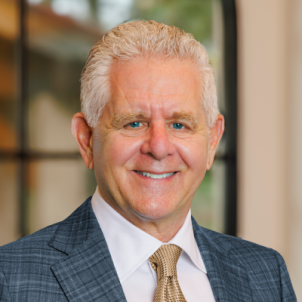

Tony Robbins
Entrepreneur, Author & Peak Performance Strategist
In our latest episode of Retire With More, Mitch Tuchman sits down with entrepreneur, author, and peak performance strategist Tony Robbins to discuss the insider investing insights and strategies Tony has developed while researching and writing his critically acclaimed, best selling book MONEY Master the Game: 7 Simple Steps to Financial Freedom. You’ll hear Tony and Mitch discuss topics like The $13 Trillion Lie, the ‘risk myth’, and the conflicts of interest inherent in the investment industry. It’s an episode you don’t want to miss.
Transcript
Introduction: I’m John Rothman, and I’m Mitch Tuchman, and you are listening to the retire with more program. We are delighted to have you. And we have a very special program today, a very special guest, Mitch. Take it away.
Mitch Tuchman: Well, today, we are honored to have Tony Robbins on our show. And so instead of introducing Tony directly with all of the things I could say, I’m gonna ask you a question, Tony, just to get this conversation going. Okay, so Tony, you are the world’s leading authority on leadership psychology. You’ve coached and inspired more than 50 million people, CEOs like Mark Benioff, local guy here, who’s done a lot of great stuff in San Francisco and some of the world’s most high achieving people, around more than 4 million people have gone to your live events, and Oprah even calls you superhuman. So Tony, against all advice from friends, even your publishers. You, as an outsider, decide to go write a book, and I’ve read it, and I’m in the financial services business. It’s complex. 600 pages. You trying to distill the complex world of finance. Why on earth would you go write money master the game?
Tony Robbins: What’s interesting, it began because of 2008 when I started seeing I grew up dirt poor, and we have no money for food at times, even at Thanksgiving. And it’s one of the reasons that, you know, I’ve had 42 million people over the years, and this year I’m feeding 100 million people. And I did it with these book proceeds, was part of it, and I added a bunch of money to it. But what it drove me was seeing all these people literally losing their net worth, half of it overnight. You know, seeing people losing their homes in mass, those weren’t statistics to me. I mean, I lived that life, and so I’m fortunate enough to have a privilege, and that’s access. I’ve been coaching a man named Paul Tudor Jones, who many people know is one of the top 10 financial traders, literally, in the history of the world. This is a guy who in 1987 when the stock market had its largest drop, percentage wise, still in history, 20% of the day made 200% those clients that year made a fortune that day. You know, I was working with him. I worked in IT for 21 years. He hasn’t lost money in 21 years. I mean, how many people you know to scale on Earth to say that? And not only that, but you know, in 2008 when the market says, you know, we’re down 51% from peak to trough, he made 28% so I have a tremendous level of insight, because I’ve been coaching it for 21 straight years. Literally every day writes to me, I see him in person. And so the level that I’ve been able to absorb in the financial areas beyond what most people have the chance to know in their lifetime. And I thought if I could add to that by, say, interviewing 50 of the smartest, most brilliant financial minds in the world, Nobel laureates, self made billionaires, hedge fund founders. And I could find out what are the common denominators. I really have something to add value. I could help. You know, a millennial who’s just getting out of college and think they’ll never be financially debt or free. You know what I do with all this debt? Or even a baby boomer who maybe didn’t do so well in 2008 and they haven’t gotten back in the market, and they think all and they think I’ll never retire. If I could help them and be a worthy task, and then if I could find a way to take this and help people that society’s forgotten, you know, the 49 million people in this country that you know, including 17 million children that wake up every morning not knowing if you’re gonna have food or not, then it would be something that I could sink my teeth in. So it was a four year journey, and I loved it, but you’re right. Everybody told me not to open the doors too complex. There’s no way you can do this. He’s one of my dearest friends, and obviously believes in me. My publisher said, Tony, I’ll give you a sizable additional bonus if you don’t write. He said, Because. And I said, Why would you say that? He said, because, you know, it’s an industry, and it’s a category that’s depicted death like a scavenger, there’s nothing left. And I said that’s because there hasn’t been a great book in this area, because it’s based on individuals opinions. None of this book is my opinion, other than how to shift yourself psychologically, emotionally, because that’s been my 38 year expertise right around the world, 10s of millions of people. But when it comes to the financial side, I want to bring the best that exists on earth. People made money in the worst times. Made money in the best in the best times. And simplify that so it can be done. So it came together, and I actually saw my publisher. The book’s been number one as a New York Times number one business bestseller for four straight months, 17 straight weeks. And I saw him just a couple weeks ago, and he said, there a few words in English language are better than I was right. I’m just glad it all worked out. So I feel really grateful that people who normally will not open their doors were able to give me this much time. I asked for 45 minutes. My average interview was three hours. You know, Jack Wilmore, I spent four hours, he said, he gave a quote in the book where he said, Tony came by for 45 minutes, and four hours later, I had the most provocative and profound discussion in my life about my career and my insight. So, you know, Ray Dalio gave me insights that he’s not shared with anyone who made that very clear in his entire history. You know, 23% returns for 21 straight years. So I’m really pleased to be able to bring this to the general public. And if you’re unsophisticated, you can start with this book. And if you’re sophisticated, you go straight into the greatest matter. Investors of finance and see directly what they have to say.
Mitch Tuchman: Well, one thing that I just loved about it is you’ve rattled off a lot of very sophisticated investors like Paul Tudor Jones, but no one has heard of Paul Tudor Jones unless you’re ultra wealthy or you’re running an endowment and you know, or have access even to, well, access to his Fund, which I’m sure most I bet he’s been closed for a long time, but he has been, yeah, but, but at any rate, I mean, what you’ve done, though, is you’ve interviewed all these people, and then you’ve brought it down to the guy with a couple $100,000 IRA or 401, K and so, yeah, you know what? That’s what I love about it. So one of the first steps that that you said in the book is, if you want to master the game, let’s get on the inside. Let’s become an insider and know what the rules are, and you start dispelling all of these myths that rob people of their financial dreams. I just like to discuss a few of them. I mean, I know you went through nine of them, and we probably don’t have a lot of time here, and we to go through all nine, and we, on this show, talk quite a bit about the $13 trillion lie that that beating the market is is a myth. It’s just gotten harder and harder and on our rebalance, IRA investment committee, Charlie Ellis has written lengthy articles recently about why it’s even gotten harder over the years. Rebalance IRA, we talk a lot about fees. We We bring our clients fees way down, but those are like a cancer in your portfolio. They just it’s insidious, how they erode value. Well, let’s talk about though, you know, I love the way you address the concept of, I’m your broker here to help. I love the way you address some of the things about how returns are are misrepresented in the in the media, and it’s legal to do. And some of those things can we go through? Just click off. I’ll guide you on a few that I’d love to talk about. What about the broker thing? I mean, the conflicts of interest in the business?
Tony Robbins: Well, you know, one of the I made a mission to teach people the F word, and the F word in finance is fiduciary. You know, it’s not a word the average person may have heard. It sounds really complex, but here’s the crazy thing, you know, you think, okay, everyone’s gonna tell you, give me your money and we’ll beat the market. You’ve already said, it just doesn’t happen. 96% of all mutual funds over any 10 year period of time, fail, I repeat, failed to beat the market. So the 4% that do, what’s your chance of finding that mutual fund that’s in the 4% that beats the market. Well, if you play blackjack and you get two face cards worth 20, and you’re playing 21 and your inner idiot says, hit me, you have an 8% chance of getting an ace. You have a 4% chance of finding the right mutual fund. So it’s just not true. There are a few, you know. What I would, you know, look at is these, these weird, you know, unicorn exceptions, like array value, like a Paul Tudor Jones. But as you said, the average person can’t get access to them, so they’re not practical. So I think the first thing going to do is you’re not going to beat the market. I think the second thing that you mentioned is, you know, fees. I mean, let’s be specific. You know, you use the right word cancer. I mean, that’s about as direct words you can use. It destroys your financial future. And here’s the simple thing. This is one of the only industries in the world where you can pay 1000 times more than another person for the same product and not know it. It’s like if I said to you, you can buy a Honda Accord for 20,000 and I sold it to your neighbor for 350,000 you would think he’s an idiot and I’m a crook. But that happens every single day in the financial markets. Because you can go get the index Jack Vogel at Vanguard for point one 7% or you can go get some of the exact same stocks and pay the average mutual fund 3.1% at the same ratio. It’s a $20,000 Honda for $350,000 or another way of saying it would be if you started at 30 years old with $100,000 and you got two other friends, and you all get a 7% return, and you keep compounding at 7% for 35 years, so you’re gonna retire at 65 you know, what do you have? Well, if you have a 1% set of fees, you have $574,000 your 100,000 went to almost 600 grand. Pretty nice return. You return. But if you get the same return on the same investment, right? But you had 3% in fees. Now you had 324,000 I mean, literally, almost losing, almost getting 50% up in fees to someone that added zero value. I mean, there are so many people out there right now. I know you guys are exceptions that what you do, you know, in your firm, you know, retire with more. But the idea is, you got people that say, Oh, we got Vanguard funds. Vanguard charges point one seven, and then they add 60 basis points, or more than half a percent on top of there’s one I just saw recently. It is a 401, K plan, 110 basis points. So they only charge you, point one, seven and then, meaning Vanguard. That does all the work. These guys are telling you to buy Vanguard, charge you. I know
Mitch Tuchman: it’s insidious, it’s insane.
Tony Robbins: So you’ve got to educate yourself. You’ve got to Become an insider. Watch, do the book and give you that. We’ll talk about the broker. You know, I’m your broker. I’m here to help. Here’s what’s true. I. Most people in any industry, including the financial industry, have integrity. The majority do. The majority really do care. The problem is that a broker, which, by the way, there are 327, names that I was able to identify for broker, everything from wealth manager and gone down, they’re just still a broker. What is a broker? Well, the broker may have good intent, but if you go to someone who’s a butcher, and you say, what’s for dinner tonight? He’s going to sell you meat, and that’s because that’s all he carries. He’s not a bad guy. Probably eats the meat himself. He’s probably an expert on that meat, but he’s got a limited selection. If you went to a dietitian, they would say to you, wait a second, I don’t make money off meat, and you don’t want to be eating as much meat. You’re gonna get cancer eating this much meat. You know, we need to put some salad in here. Maybe you have some fish. Let’s cut back on these things. And that’s really what a rich investment advisor does, or a fiduciary, because legally, that broker might have the total positive intent, but legally he does not have to put your needs ahead of his own. He just has to show that whatever you’re investing is suitable. You know what is suitable? Well, it aligns with your goals. To some extent, you’ll never get sued for that. Versus the fiduciary, if he said, buy Apple today, and later, he buys apple at a cheaper price on the same day, he’s got to give you the stock. He got cheaper because he had to put your needs first. He couldn’t be making a benefit off you in that area. So it’s a unique approach that fiduciaries have. There aren’t that many. You’re one. You understand, as a registered investment advisor, giant promoter of saying, look, it’s not enough to have somebody that’s sincere. They can be sincerely wrong. You need somebody that’s tried legally to put your needs first. Now, I would add one more piece, okay, and that is, you don’t want just to, you know, some people would be better off, frankly. And I know Charlie would agree with me. Charlie also agree with me. Also. I know David from Yale with Swenson, who’s, you know, greatest institutional investor, I would say, in history, took them from 1 billion to 24,000,000,030 years to mind boggling. Yeah, I know they’d agree that a lot of people would be better off. You know, if they’re got a small money, maybe they just put it directly, index funds. So I know that some people are self doers, but my experience is, if you get somebody who’s a fiduciary, who can give you the expertise they have at a reasonable price under 1% that person can usually do a really great job for you, as long as they’re not getting a commission, they’re not passing those things. So I created a site called portfolio checkup.com and a portfolio checkup.com you can go in and get the answer that most of us don’t know. You can link all your accounts in a few minutes, wherever they are, and then you can say, How much am I really paying in fees? And you get the reality check. You can look at that. You can say, Okay, how much risk Am I really taking? And you can make a comparison to what other portfolios are. Then you can take that and do it yourself, or you can be recommended to an RIA like yourself, with somebody who’s got integrity. But I think there are-
John Rothman: Tony I hate to interrupt. I’m the bad guy. We’ve got to take a break. We’re going to come right back. Remember, www dot rebalance, ira.com when we come back more with Tony Robbins.
John Rothman: I’m John Rothman and I’m Mitch Tuchman, and you are listening to the retire with more program. Our guest is Tony Robbins and Mitch, why don’t you pick up where we left off
Mitch Tuchman: Tony, we were talking about your book, money master the game, the best selling book, and it’s about money and finance. And we were talking about some of the myths that you helped dispel in the book, and we were going through the last few ones on the list. What about the ones that you call the lies we tell ourselves? I love that one.
Tony Robbins: Well, you know that it’s interesting. There’s all the things that the financial industry does to make things complex. Thank you. Just give up and basically give them their money so they can charge you these crazy fees. Again, a lot of people enormous integrity in that business, but the system is not set up for you to win. The system is private corporations, which their job is to make a profit. And so they’re not evil. They’re trying to do what they’re supposed to do make money for their shareholders, but that’s not make money for you. And so I really believe that if you can get through all that, then you got to get through your own limitations, which is, you know, oh my gosh, money is the root of all evil, or if I make a lot of money, then I’m not spiritual. And so what I try to do in the book is show you that if you’re going to become an insider, you got to understand how the game is played, but you also got to understand what your own limits are. I always find in any business or in any investment approach. People, the biggest limitation they often find is in themselves. And so I give you a set of tools to uncover what they are, dispel those myths, just like you’re doing with the other financial myths that are out there. But really, you know, one of the myths I think it would be useful to highlight for a second, if you could, is I interviewed all these people and and I’m talking to some of the greatest investors, literally, in the history of the world. And some of them are people I interviewed before they passed. Like some people may have heard of, Sir John Templeton, the first millionaire investor, right? Extraordinary man. You know, Charles Schwab, Mark Faber, T Boone Pickens, I mean, Ray Dalio, The Greatest Name, Warren Buffett. One of the things that I found is they all had different approaches. Approaches to investing. And so you know, people say that’s confusing. Well, no, let me show you how to set yourself up to win the game, and then let’s look what best aligns with you. And so when I did that, though, I did find there was one thing as a myth that I had. And the myth was, I thought that these mostly multi billionaires that started with nothing must have taken gigantic risk to get where they are. And the truth of the matter is, they all live by one universal principle at that level. And it’s something most investors, average individual investor, never heard of. It’s called asymmetrical risk reward. It’s a big word. What does it mean? It simply means they do not risk a lot to make a lot they are obsessed with finding what’s the least amount of risk I can possibly take with the greatest potential upside? In other words, how do I risk a little and make a lot? And the way in which they do that is really interesting. Paul Tudor Jones does it by I’ve worked with him for 21 years, making sure he does this every time he makes an investment. His question is, is this a five to one? If I risk $1 can I really make five? Now he knows he’s going to be wrong, so if you risk the dollar trying to make five and he’s wrong, you can now risk another dollar. He’s only risk two to make five. He can be wrong four times out of five and still be great. For a better example might be Kyle bass. Kyle bass is a man who’s very famous because he took $30 million of other people’s money and converted to 2 billion in two years, if you can imagine that. And he did it in the worst economic crisis of our history. I spent days and days with him. I know him very well as a good friend now, but I can give you the whole game of how he did it in one distinction, he never risked more than six cents to make $1 most of us risk $1 to make 10 cents, 10% or $1 to make 20% like 20 cents, he risked only six cents to make $1 in other words, if he was wrong, he risked another six cents, a risk, he could be wrong 15 times and still make money. I’ll give you a more simple example that might make sense is, most people admire Richard Branson, and most of you think of Richard, he’s a friend of mine as a huge risk taker, and you’d be right. He’s a risk taker with his life, but not in business. Crazy. He’ll go on a balloon. We can go on a boat, you know, we’re going on his, on his, you know, spaceship together. I mean, those opportunities are scary, crazy. Take your life at risk. But when it comes to businesses, number one question is, how do I protect the downside? And when he does it, I’ll give you a perfect example of asymmetrical risk reward. When he started virgin air, his biggest risk is, you’re buying these, you know, whatever, millions, 10s of millions of dollars, Boeing jets. And so he went to Boeing and made a deal that said, if he failed, if the business didn’t work, within two years, he could give back all the jets with no downside, no liability. So check this out, no downside, all upside. That’s the way these people do it. You might say, well, Tony, I don’t have access to hedge fund guide, so how am I going to do that? Well, if you work with somebody who’s a really great, rich investment advisor, and they’re sophisticated, they might say to you, you know, you might take a look at some alternative investments. You might look at trust deeds, where you can do a one year trust deed, and you can provide the money for that trustee, which with a promise of payback, and today, I get 10% returns on one year, trustees and marketplaces, where I know I’ve historically in 2008 worst time in history. They didn’t drop 50% they may have done it over three years, but not a year. So my risk is extremely low, extremely low. It’s never happened in history. My upside is 10% versus 4% on, let’s say, a junk bond, which is kind of crazy, and I’m getting a nice return with some asymmetrical risk rewards. So there are many ways that you can do this without being involved with a hedge fund. And I think from what I heard about what you guys do, Mitch, I mean, you’re looking to use ETFs, you’re trying to find the greatest levers, the least amount of risk, the least amount of cost possible. So it’s the same type of thing, but I think asymmetrical risk reward is something that people look I’ll give you one final example with Kyle bass. I said, How would you explain this to a child? He said, I’d explain to my kids. Is it perfect? How’d you do it? He said, the answer is, nickels. What do you mean nickels? He said, Tony, I asked myself a question that most investors don’t ask. I said, Where can I get a riskless return, or on day one, I have a 10 or 20% return on day one, and I have no risk. Any one of us would say that’s impossible. But he was obsessed, and so he came up with nickels. And here’s what he figured out, the US government at that point was spending nine cents to make a nickel. Wonder why our government’s in bad shape, right? Of that, he found that the actual nickel itself, the actual it’s not just nickel, it’s materials that they use, was costing them more than nickel 20% in other words, if he buys nickels, the day buys them, they’re worth five cents, they’ll never be worth less than five cents, so they’ll never go down in value. So whatever he invested, it’s never going down in value, but the day he bought it, it’s worth 20% more just melt value. I said, but you can’t really melt money today legally. And he said, That’s true, Tony, but look at what’s happening with pennies. Used to use copper, and then it costs way too much to make a penny. The government finally woke up and they used kid, and now those one cent pennies, some of the worth 10 cents. The average one is worth two cents. It’s 100% return. He said, If I. I could push a button, give her all my money in nickels tomorrow. He said, I do it. So he said, what I did with my kids was I bought $20 million in the nickels. And he said, I want the Federal Reserve. And he said, I got 20 million nickels, and I have my kids come in and see this. He’s got this room full of nickels, if I just wanted to show them, there is a way of riskless returns that are guaranteed if you think creatively enough. So, you know, Nichols might be the ticket.
John Rothman: You know, Tony, the way you’re talking, I think we might want you to be the next Secretary of the Treasury.
Mitch Tuchman: Well, you know, speaking of risk, you know, like you when I when I learned from David Swenson, I read his book, but it was a life changer for me. We’ve been lucky enough for Rebalance IRA to have Charlie Ellis, who oversaw that committee, on our investment committee, but Charlie recently said that swenson’s greatest attribute is controlling risk and playing not to lose. So as a as a authority on leadership psychology, I have a question for you. You deal with high achieving people, you try to get people to become higher achieving people, and that’s all about playing to win, right? Playing to win. And I find, though, that investing is more about playing not to lose. And so when I talk to clients a Rebalance IRA, who are high achieving people who’ve made enough money to invest, and I say to them, this is about playing not to lose. This is about protecting the downside. Let’s invest in a in the global economy. Let’s keep our expenses low. Let’s make sure we have exposure in all the asset classes, you know, in all of the normal things you covered in your book. How? How would you recommend for me as an RIA that I talk to clients that are high achievers, that they’ve got to change their attitude, from playing to win to playing not to lose.
Tony Robbins: Well, nobody likes that. That’s not a psychology. Most people like and yet, you you know what you said about David is absolutely true. I got spent quite a bit of time with David and follow up with him multiple times. Every one of these investors their first obsession, Paul Tudor Jones, first obsession is not losing. And the reason is, understand something is all asked the average investor, I’ll say something. If you lose 50% you know, how much do you have to make to get even? And the average investor says 50% and you and I both know that’s not true. Start with $100,000 lose 50% you got 50,000 if you grow 50% you’re only at 75 you gotta make 100% to get even. People understand the geometric impact. So what I try to do is, rather than start out with saying, We got to play protection, I usually start out by getting them to see that two things are important. Here’s what it really costs you if you lose, and this will the greatest investors on earth know. Second thing that I try to do with those individuals is I get them to see, look, if you can put yourself in a position where you don’t lose what everybody else does. You’re richer. So I’ll give them examples that. But I use what I call my core four. My core four, I didn’t put in the book because it kind of evolved after it. I thought all the things I’ve learned, the book takes you step by step through them all. But if I’m looking to build an asset allocation, which, as you know, is the secrets all investing, that’s the one thing in common, other than getting in the game, reducing your fees, you know, knowing how to win the game, knowing the numbers are going to really win the game, versus the way you’re probably taught traditionally, things comes down to asset allocation. And when I do it, I look at core four. My core four is number one. And I’ve learned this every investor, every Ria, every person that advises me. My first question with them now is, how do we not lose money? Can I use the way I educate them about those use all the investors I’ve talked about. I give them examples, just like I did with you here to Richard Branson, because they ever think these people are in China, they’re stickers. They’re not. It does not they protect themselves. First I get everybody anchored on that, and then the number thing I do is, okay, where’s the asymmetrical risk reward on my assets? I want to make sure there’s a significant amount in there where I have huge upside with very little downside. I question them. Show me that. Show me where it is. So we find the right mix that can allow me to do that. Then my third one came from, really, from David Swensen, more than any other. I asked David. I said, one of the you want to get greater returns. What are the things you can manipulate? If it’s only you can only manipulate a few items you can manipulate. You know which stock selection you make. You can manipulate the timing. And he said, You can manipulate asset allocation. He goes in of those three asset allocations, the only one that matters, because you’re going to be wrong on timing, and it costs you money to get, you know, some advice, and you’re going to be wrong a lot of those pieces. So asset allocation is the most important thing, diversification the most important thing, like you guys are teaching, but he said the other one is really making sure that you also the third principle I use is tax efficiency, because you and I both know you don’t get the money. It’s not what you earn, the matters, it’s what you keep. The matter. You can’t spend what you earn. You only spend what you keep. So tax efficiency, you know, he would not have the returns. He has David Swinson at Yale, 1 billion to 24, billion, if you’d be in Texas. I give the example the book. Most people know compounding. If you compound $1 it’s $2 compounded the next year, it’s four compounded eight. You do that 20 times. You have $1,048,000 but if you just paid 33% tax each year, and most of us have more than 33% tax, especially people listening in California, so it’s 33% tax each year, what do you end up with? People think, well, 33% it was 1,000,048 I get. Well, what? 700,000 600,000 you have $28,000 left, instead of 1,000,048
John Rothman: Tony, I’m glad you’re doing this, because April 15 is fast approaching, and of course, we have to take another break. But I want to remind our listeners that we are very fortunate to have with us. Tony Robbins, here on the retire with more program, and you can find out more by going to rebalance ira.com and when we come back Mitch, I’m going to ask you to continue the line of questioning with Tony and Tony, all I can say is I’m so glad you’re with us right here on the retire with more program.
John Rothman: I’m John Rothman and I’m Mitch Tuchman, and you are listening to the retire with more program. Our guest is Tony Robbins. Those of you who’ve been listening to the first two segments know he is a phenomenal guest, someone who really knows what we are talking about. We want everyone to retire with more So Mitch, take it away. Let’s go into the next segment.
Mitch Tuchman: So we’re we’re talking to Tony about his best selling book called Money master the game. Tony, there was a whole section. One of the seven steps is an inner to me, it’s an intersection between what you learned by interviewing 50 luminaries in the investment business, and it’s also an intersection between that and what you’ve been doing for a living for all these years. In leadership psychology, you found that most people have no idea how much your how much their dreams to achieve financial security or independence really cost. You gave a great example of a kid. You asked, What do you want? I want to be a billionaire. And then when you got right down to it, you found out that the kid could achieve everything that he wanted with $10 million and you provide some exercises in the book about how to drive these dreams into ones deep into their mind. It reminded me a lot of that old book Think and Grow Rich, which as a young man, I read many times. But can you talk to us about how we can define our dreams and then make the game winnable? I just love that make the game winnable, because dreams are dreams, unless you have a plan. Love to hear more about that.
Tony Robbins: Well, it’s interesting. You know, the vast majority of people have been given advice that’s 20 or 30 years old and inaccurate. You know, in fact, I saw in USA Today, two weeks ago, there was a story, and they’re saying, you know, how much do you need to set aside to retire? And the person said, eight times your income. And I thought, Where on earth did they come up with that? I remember they used to take 10 times your income, meaning, if you make $100,000 a year, you need a million dollars to retire. Well, to do that, you know, most of us know the 4% rule is dead, but for simplicity sake, let’s just use simple math. Where are you going to get $100,000 a year out of a million? That means you’re going to be getting about a 10% return if you’re not going to be reducing, especially if you’re younger, and most of us are living a much longer than we ever dreamed of living. And that’s going to get geometrically better, since they digitized more of our DNA and digitized health. Just like digitization has changed, the tech industry is now about to change our biochemistry on a major scale. So everyone’s living longer than they ever were, but we’re about to see a geometric change in that again. So you got to think in terms I’m going to get a return. We’ve got to get a 10% return in secure environment, or 12% it’s just not going to happen, not in the world we live in today with suppressed interest rates. So I look at this and say, here’s what you got to do first. First, you got to break this into multiple notes. Here’s what’s your number you know, here’s what you got to know. You need to start with a small goal, a goal that’s within reach so you can achieve. We all build on success. We don’t build on failure. If you’ve got this huge number in your head, somebody say, Okay, what’s really real? Well, what’s really real is probably 20 times your income, 20 times my income. So if I make $1,000 What are you saying to me? You say I got $2 million well, at a 5% return for the rest of your life. You know that’s probably closer to reality, right? You’re gonna have quality life. Is also gonna be inflation. You got to remember that also. So what’s interesting is that seems so big. Here’s what I do with people. I said, let’s start with a short term goal called financial security, and think about the word financial security versus financial independence versus financial freedom. You know, which one is higher security or freedom? Not hard to figure out, right? Security is a lower level goal. So I said, let’s define it in very specific terms. Here’s what I have people do. I ask people, How would you feel if you had enough money, enough income coming in off your investments in a secure environment? You have to think about it, where the income itself would provide for six things you’ll pay for your mortgage for as long as you live. Never have to think about your mortgage payment again and pay for all utilities, provide for food, for your family, transportation and your basic insurance. Those might. Things. How would you feel? Most people go, my God, that would feel that’s most of my expense in life. That would feel incredible. You’re right. Here’s what’s cool. That number is at least 60% less than the number you would normally think of, and you would still work. But you’d work not because you have to for those major things. You work for the things that you really enjoy. And here’s what I know. If you look at all the research today, when I was growing up, the goal was get rich and retire when you’re 40 or 50 or something, right? Today, the goal you know my friends. You know Mark minioff is your friend. He’s 50 years old. I know he’ll be working when he’s 75 there’s no question. My friends are 75 Steve’s win Las Vegas, right? Multi, multi billionaire. He works more today than he ever has. Warren Buffett’s in his 80s. What 84 now? 85 works more today than he ever did. The goal today is, if you love what you do, research shows people that make 750,000 a year. If you make that much money, 90% of those people say they’ll never retire, or the earliest they would is 75 and most of healthy 75 year olds I know are working because they do it, not because they have to. The goal in finance is to get to a place where you don’t have to work. It’s not not to work. There’s a statistic that was done, it was published in the medical journal in Britain recently, where it showed, if you retire at 55 the average person dies in 10 years. If you do it in 65 the average person dies larger than that, I think it’s what, 14 or 15 years it’s like if you retire and you don’t have a meaning for what you’re doing with your life, if you don’t have a greater purpose, that’s not the goal. The goal is do what you love, and if you don’t have to work, you work differently. So I said to people, let’s get if you don’t have to work for these six items, five items, and then let’s work part time for the other stuff. And then let’s set a new goal, financial independence, where it’s the lifestyle you have today without working right, that number is going to be a bigger number. And then maybe there’s something called financial freedom. It’s a better lifestyle than today without ever having to work. But you know, I’ve been fortunate to hit that target a long time ago in my life, I work harder today than I ever did when I had to work. I mean, but I do it because I love it, you know, and I’m able to do things by feed 100 million people. I mean, it’s inspiring. Taking care of yourself and buying toys or cars or planes or all that stuff is really a great privilege, but it will never excite you as much as thinking that you can change someone’s entire life, or you can change a community, or you can change somebody, and that you have the resources to do it, economic resources, time resources, so I get people to set very specific, measurable goals. And you can figure out what financial security is by adding up the cost of your mortgage, utilities, the average monthly food, what is your cost, you know, for basic travel, basic insurance, and you’ll know what that number is. And then I show you next, how do you put together the asset allocation that can really get you there.
Mitch Tuchman: It’s great. It’s great. And I also love some of the things you address about how to really deeply internalize those goals so they sort of manifest themselves while you’re doing whatever you do as and it only comes from having goals that you believe are achievable deep down inside.
Tony Robbins: Yeah, the term is absolute certainty. I mean, you see it in every if you watch the ncvm way championship. You watch, anytime you watch a player go out there and you go, you’re gonna miss that free throw. And everybody, most people paying attention, always gonna miss how do you know? Because you can feel, while he has the talent, he’s missing the certainty that’ll get you to execute. If you got a goal, but you don’t have a plan that makes you certain you can achieve it. You’re not gonna execute. You’re not gonna follow through. You’re gonna have this idea you keep talking about. And I think that’s the biggest challenge for those people. They just don’t get started. So when you make the goal reachable, when you make the goal where you feel you know, you can do it, then you’re willing to take action. When you get action on the first one results. Now you reach for the larger one and and everybody gets momentum, right? Well, you know, there’s nothing you can’t build on failure, only build on success. So when you make this goal, that’s this huge goal. Like the kid who told me, I need a billion dollars to be financially secure. What I did with him is, I said, Okay, tell me everything you want. He wants the Gulf Stream, he wants the island. And I know I have portraits to have those things. So we went through what the price of those things really were. Add them all up, you could have all those things for 10 million bucks, in terms of the interest on it would pay for those things to have that lifestyle. So you don’t have to be a billionaire to have extraordinary lifestyle. You just have to understand what it’s really going to take. And until you sit down and put a price on your dreams and find out what they really are, it’s like, why would you go buy a brand new plane for whole when he could just charter the plane for the you know, 10 trips a year he wants to take his family. It’s a big difference between paying $56 million for a plane or $4,000 an hour, sure, sure, it’s a different game, and that’s part of what I really show people I do in the book, cool.
Mitch Tuchman: Well, let’s go back to these interviews. You did these 50 interviews with these legendary financial experts, even our own Rebalance IRA investment committee member, Burt Malkiel, and I got to tell you what you said in the book was, was, was great. You said that listening to Bert talk about investing was like listening to Bruce Springsteen playing acoustic guitar in your apartment playing, Born to Run. And I got to tell you at our investment committee meeting in New York last January, we gave Bert a lot of grief about that, when it was very funny, and he said that even his kids and grandkids are teasing. Him endlessly to this day about that comment, although I don’t know that his grandkids even know who Bruce Springsteen is, but, but that was great, but, but, but, of all of these guys you talk to, and again, some of them are, you know, hedge fund guys, but which? Which of the interviews you know, if, when you’re talking to a regular everyday person with a few $100,000 working for retirement, do which ones stand out the most that gave a few great pearls of wisdom for that person that they could execute?
Tony Robbins: There are so many. But I think if I had to narrow it down, I would say Ray Dalio again, the average investor probably never heard of his name. But, you know, wealthy people may have money, they tend to go to people that have hedge funds, and hedge funds have the ability to invest in the market on the way up, on the way down, a variety of assets that’s involved with. And a really large hedge fund might be, let’s say, $15 billion Ray is the largest hedge fund in the world, but he’s 10 times bigger than the largest one. He’s 100 and $60 billion he manages money for China. So I had, you know, it turned out he was a fan of my work, and looking at my audience, audio programs for decades. So he really opened up and gave me the time. And in my last question, you know, for all of them, at some point in the interview, I asked all these investors, if you couldn’t give up any of your money to your kids, not a dime, and you wanted them to succeed, what would be the portfolio? What would be the asset allocation. What would be, you know, the set of principles that you would teach your kids to make them financially successful for a lifetime? And Ray had the most interesting response. He said, I spent a decade of my life answering that question. I have the answer. I said, Wow. What is it? He said, Well, you know, there’s an illusion that most investors have. They go to a traditional financial planner and they say, as you get older, we’re going to change your asset allocation. Want to make it more so you’re more protected. So we’re going to do like 60% let’s say in equities, stocks, and maybe 40% in bonds, as a typical example. And you have now, quote, a balanced portfolio, or 5050, the problem is, nobody pays attention to the fact that when we have these giant drawdowns like 2000 2008 you had a pizza trough, 51% draw down that basically lost money on their bonds and their stocks. They weren’t protected at all. This whole theory is total voice, he said. So what happens, though, is the market eventually comes back, and all the advisors just focus on the fact the markets doing well. Nobody addresses it. He said, I decided to address it. Took 10 years to do it, and I discovered something. It’s really simple. When people say they have a balanced portfolio, they’re not balanced at all. They’re balancing the amount of money, but they’re not balancing the amount of risk. And risk is what makes you or breaks you. And so he created something called Risk parity. And here’s what it is. If you’re say 60, 4060 in equities, 40% in bonds, you’re really since equities are three times more volatile than bonds, he showed you that you’re 90% at risk and 10% protected. And this is something that very few people on earth understand. And so what he did was he said, you know, here’s what’s interesting, there’s only four things that change the market. The changes in inflation or deflation move prices of all assets, and whether you market, whether the economy is growing or shrinking, those four elements up and down, inflation, inflation, deflation, growing among market or decreasing market or economy, I should say, are what move different assets, and they all do what role at different times. They all have their own season. And so he said, I created over the years, you know, this approach that allowed me, I call, he called it all weather to make money no matter what market it is, and so I make a little bit less return. He’s known for making 23% for 21 straight years, you know, before fees. But he said, I decided I want something where I can make a 10% or an 11% return, a 12% return on average, but where you didn’t have the volatility, you have the stomach problem. Tony.
John Rothman: I hate to do this to you, but I’ve got a break that I’ve got to take. We’re 75% done. We’re 75% done. You get 25% more. Our guest is Tony Robbins.
John Rothman: Hi, I’m John Rothman and I’m Mitch Tuchman, and we are the retire with more show, and we are delighted to have Tony Robbins with us his best selling book, Mitch, in this last segment, I know you’ve got some critical questions for
Mitch Tuchman: Tony, sure. So Tony, we’re talking about in your best selling book, money master the game. You interviewed all these legendary investors, and we were talking about Ray Dalio, and I had to interrupt you before the break, but you were talking about the sort of all weather portfolio. So why don’t you finish that? Thought it was really great.
Tony Robbins: Well, here’s what’s interesting. You know, Ray’s whole idea was, how do I without knowing what the market’s going to be 20 years from now, when I’m gone, be able to have something that will prosper for my kids and for all the philanthropic things I’m involved with. In other words, I got 1500 people right now at Bridgewater. It is fun working around the clock. Get the best ideas, but if I wasn’t here, how could we win? And what he said was, listen, the average person can’t take the volatility. Dolbar did a research project. So the last 20 years in the market, the market, the s, p did 9.2% compounded, but the average investor saw 2.5% that is insane. How is that possible? Fees, and we all do the opposite. We sell. When we should buy, we buy, we should sell. It’s the volatility that kills us. So he said, I went and said, How do I get less volatility with a greatest return? And so he created this all weather, and he’s done that for his top clients. So he explained to me the details, how it worked, what it worked. And I said, Okay, I’m gonna put this in the book. Just one problem. You’ve told me the principles, but you haven’t told me the percentages. And we all know when it comes back allocation, you live and die by your percentages. Right? You’re the wrong percentage. You’re not gonna work. And he said, Well, Tony, you know, you’re asking me to give my secret sauce. That’s that I get billions of dollars for. I mean, you have to have, you got to be a billion dollar net worth, and you have at least $100 million to me to start for me to even take any money from you 10 years ago and today, I won’t take your money no matter who you are. He said, That’s my point. Give it me the secret sauce, because I give it to the average person. I’m giving it all away. I’m not even making money. I’ve given the book away. Like these people, we’re gonna feed people this book. I said, you cannot take any more people. You’ve got the insight. Give me the secret sauce, because otherwise you’re telling me build a chocolate cake. Use chocolate, use sugar. He started laughing, and I finally got him laughing so hard and intrigued him. And I said, Look, you’re gonna give away half your net worth anyway. You’re one of the most generous human beings. Give me the formula. And he goes, Well, wouldn’t be perfect? I said, your idea not perfect. The guy they call the Da Vinci of investing, Steve Jobs of investing, and your idea of not perfectly on earth. He said, Well, I don’t want to do it with leverage. I said, design one without leverage, because all weather has leverage. He said, Well, we’ll do this all season. They started leave listing this. I got chills down my spine when we went out. We had it tested by an outside firm. You know, most people back test something and see how it did. And no, we always say, you know, the past doesn’t guarantee the future, because most people back test for five years or 10 years. We back tested this for 75 years, the entire modern period of investing 75 years. And in 75 years, it made money 85% of the time, but he was the real killer. When it was wrong, it didn’t make money. But 15% was wrong, it only lost an average of 1.6% if you think about the last 10 years, saying 2000 2008 50% drawdowns. The largest drawdown in 75 years was 2.95% less than 3% it gets better. So I put this out. And then last year, there’s some people. There were a couple bloggers that, you know, where the RA business $100 million not 1,000,000,060 billion. So Tony made this great value. Would never do this. Of course, he’s completely wrong. But a human idea. Last year, you know, the S and P was up 13.69% this all seasons was up 15.3% if you came to the you know, if you remember October of last year, when the Dow lost 1000 points that people were freaking out, you know, the market, the S P was down 6% this was up point 2% you come the first of this year, January, 2015, you probably remember the first seven days this year, you’re in the business, the S and P was down 3% this was up 1% today. I looked it up this afternoon. The all seasons, you know, I shares s, p5, 100 up 1.35% the All Seasons up 2.98% more than 50% better. That’s not supposed to meet the market everywhere. But if I was saying, what’s an asset allocation with the least amount of risk and a significant, nice upside that’s average over 75 years, just under 10% with the least amount of volatility. This is something I certainly look at in the portion of somebody’s portfolio, and it’s a gift from one of the greatest investors in history, and it’s something he’s never, ever shared, so it’s quite a privilege today.
Mitch Tuchman: About No, that’s very interesting. I found the concept of long treasuries in that portfolio. Very interesting idea, but obviously there’s something to it. Ray Dalio is one of the kings of investing. Let me ask you about women, Tony as our IAS in our business, we’re told by the industry, hey, you know, women are sort of underserved because so many brokers and in a very male dominated business, women feel that oftentimes they’re talked down to, that they ask questions of their advisor, and they’re they’re not given a straight answer, that there’s all kinds of mumbo jumbo and finance speak. Yet the industry is waking up and saying women control whole hell of a lot of money, and we have to learn to talk better to women. You just wrote the book, you interviewed a few women. You’ve probably gotten a lot of feedback from women. As a matter of fact, Allegra in our office, she calls you the financial babe of the financial services industry. But at any rate, women, let’s talk about women for a minute. I mean, what have you learned? What have you seen? What are your observations? And how can people in our business, you know, at our firm, or balance IRA, how can we better empower women to do better with their investing?
Tony Robbins: Well, to me, I would hire some women as your other members of your team with me personally, because women deserve to have somebody that they can identify with who’s talented. And here’s the cool thing, I interviewed Mary Callahan airdos, because you know, when you get to this level. Of you know the people that literally manage billions. And in her case, she’s the first trillion dollar woman. She’s the CEO and JP Morgan Asset Management Division. And since she’s been there, I think I remember, right? 2009 I think is when she really took over. There’s been a 30% growth. I mean, they bought in half a trillion with a T colors of this is this, she manages $2.5 trillion she oversees these employees to help build this so I just think there are some, there aren’t a lot of women that have been dominant in this industry, but people like Mary calenderos are just their forces of nature. And she’s proven. I asked her, I said, you know, how did you make it in such a male dominated business? And she said, Tony, the great thing about Wall Street is she said it’s an illusion that it’s a male dominated business. It’s only dominant because women don’t participate and compete. She said, If you could produce results, the great thing about the financial business is it doesn’t care what your color is, what your background is. All it cares about is results. If you can produce results, you move up. It’s an illusion. It’s your own lie that your gender will be there. But the problem is not enough. Women get into the business, from her perspective, because they’re intimidated, or they think they have beliefs like, I’m not good with numbers. She was fortunate to have a father in the business, and she used to go to his work, and she used to dream about mastering that business like anything else, it can be mastered. But I think, I think the one thing that’s been proven financially is women tend to be better investors. Yes, men are men are overconfident. We think we have all the answers. Like, you know, I came back with Ray Dalio strategy, right? And then I have these bloggers in the advisory business either say it wasn’t true or say Ray is wrong and they’re managing nothing, million dollars a rounding errors in terrible advice. If he’s telling, you know, we all know he’s telling you, put the majority of money in bonds, and bonds are going to go down because interest rates only one place to go. And they don’t understand. They’re looking at the ratio, not the risk ratio, the dollar ratio. They understand a damn thing about what they’re talking about. So women will read that. It’ll make sense to them, and they’ll invest in it. Men will think I got a better idea. I’m going to do better than Ray value. I manage one 60,000,000,023% returns in 21 straight years, and they’re going to criticize and say it’s wrong. I mean, that’s how stupid men can be.
John Rothman: We’re winding down. We’re winding down in terms of time. And Mitch told me, as we got into this, that you had a final secret that we had to discuss. And I just in the last few minutes, have to ask you, what is the final secret?
Tony Robbins: Gosh, maybe the best way to describe it is tell you a final little story. I I personally, when I was building my business, like a lot of people, you know, you struggled for many years. You’re trying to add so much value, I was at a point where I was very, very frustrated. And I was driving home at midnight in this place in California on 57 three, I remember vividly in my 1968 Baja bug Dragon, and I literally pulled over the side of the freeway, and I had this insight. It was such a simple insight I still have today, the journal I wrote, I thought, full page journal I wrote, The Secret the living is giving. And I realized that my frustration was I was so focused on what I wasn’t getting, I wasn’t focused enough on what I was giving. I was giving a lot, but I was focused on what I wasn’t getting, and I just shifted my entire focus to giving. And the next 12 months were incredible, until I ran into a partner that stole a bunch of money from me, and so I found myself in a place where I lost everything. I moved in this little 400 square foot bachelor apartment in Venice, California. I was washing my dishes in the bathtub. I had no kitchen, cooking on a hot plate, sitting on top of trash can this tiny little room, and I was literally down to my last 20, $21 $22 and change whatever I had, and I realized I don’t have enough. I only got to feed myself. I mean, there’s gonna be a few weeks for this thing’s gonna be resolved. I don’t have money for my rent, so instead of, like, going out to eat and drive my car, I parked my car and I walked three miles, and I thought, I’m gonna go to all you can eat salad bar, the place called El Torito. And I’m a load up for the winter here, everything I can to make this last 595, I think it was, I remember the real number was like six bucks, if I remember, right? But I’m gonna sit there, and I’m gonna look at Marina del Rey, at all these boats and all this beautiful ocean area, this environment of abundance. I go there and I eat two plates worth of food, and I’m loading up. And what changed my life was a simple moment when the door opens, this beautiful woman walks through the door. So that got my attention, quite frankly, but what got my attention more was I waiting to see the man she’s with, and I looked down, and he’s this little eight year old kid. He’s in a three piece suit. He holds the door for his mom. He pulls the chair out for he had such a listening and talking to with such presence that I just I was truly moved. So I paid my bill, whatever it was. I got whatever’s left in my pocket, 14, $15.13 and a half whatever it was. And I got this young man, I just said, I really want to meet you. I said, you’re an impressive character. I said, taking your lady out to lunch like this, and I shake his hand. He goes, she’s my mom. Well, that’s even more impressive. You take her to lunch. He goes, I’m only eight. I don’t have a job yet. I can’t take her to lunch. And I didn’t have a plan for this. It was just spontaneous. One of those, most. Was it changed your life. And I said, Yes, you are. You’re taking her to lunch. He looked at me, and I just reached in my pocket. I took all the money I had in the whole world, put it down on the table. Thomas boy, his eyes got bigger, garbage can covers. And he said, I can’t take that. And I said, Yes, you can. He said, How come? I said, Because I’m bigger than you are. And I got him laughing. I didn’t even look at the woman. I wasn’t doing it for acknowledgment. He giggled so hard, he was so lit up. Yeah, and I flew out that door, and, you know, I didn’t have my car. I’m gonna walk three miles. I should have been thinking, hey, that was really nice. What the hell are you gonna do? You don’t need money for food. What are you gonna do? But it was the first time in my life where there was not scarcity in my nervous system. It was like and I went home. I’ll never forget I got the next morning have no plan on money for breakfast or eat. The mail comes. There’s a man I’ve loaned more than $1,000 to maybe six months before, I was doing okay, and I reached out to him probably five times in the last two weeks, and he never turned my phone call so frustrated, angry. And here I get this mail, old snail mail. I open it up. It’s a letter from this guy apologizing, give me my money back and give me interest on it. And those days, it would have been enough for me for three weeks. But here was the kicker. I’m sitting there crying, holding this thing. It was like, Okay, I’m set. And I just talked to myself, you know, what does this mean? And I realized in that moment, I did what was right. I didn’t do something for positioning. I didn’t do it to look good. I didn’t do it because I had this great strategy. I just did what felt right, and in that moment, giving what was right, and other words, no more scarcity. And I’ve had 22 businesses, 5 billion a year in revenue to all my companies. And I’ve had up times and down times, horrific times, good times. But I have never gone back to that moment of scarcity, and it changed my entire life.
John Rothman: The book is money master the game, seven simple steps to financial freedom. Our guest Tony Robbins, I want to say, thanks Tony, it’s been great. I’m John Rothman and I’m Mitch Tuchman, and this is the retire with more show you.